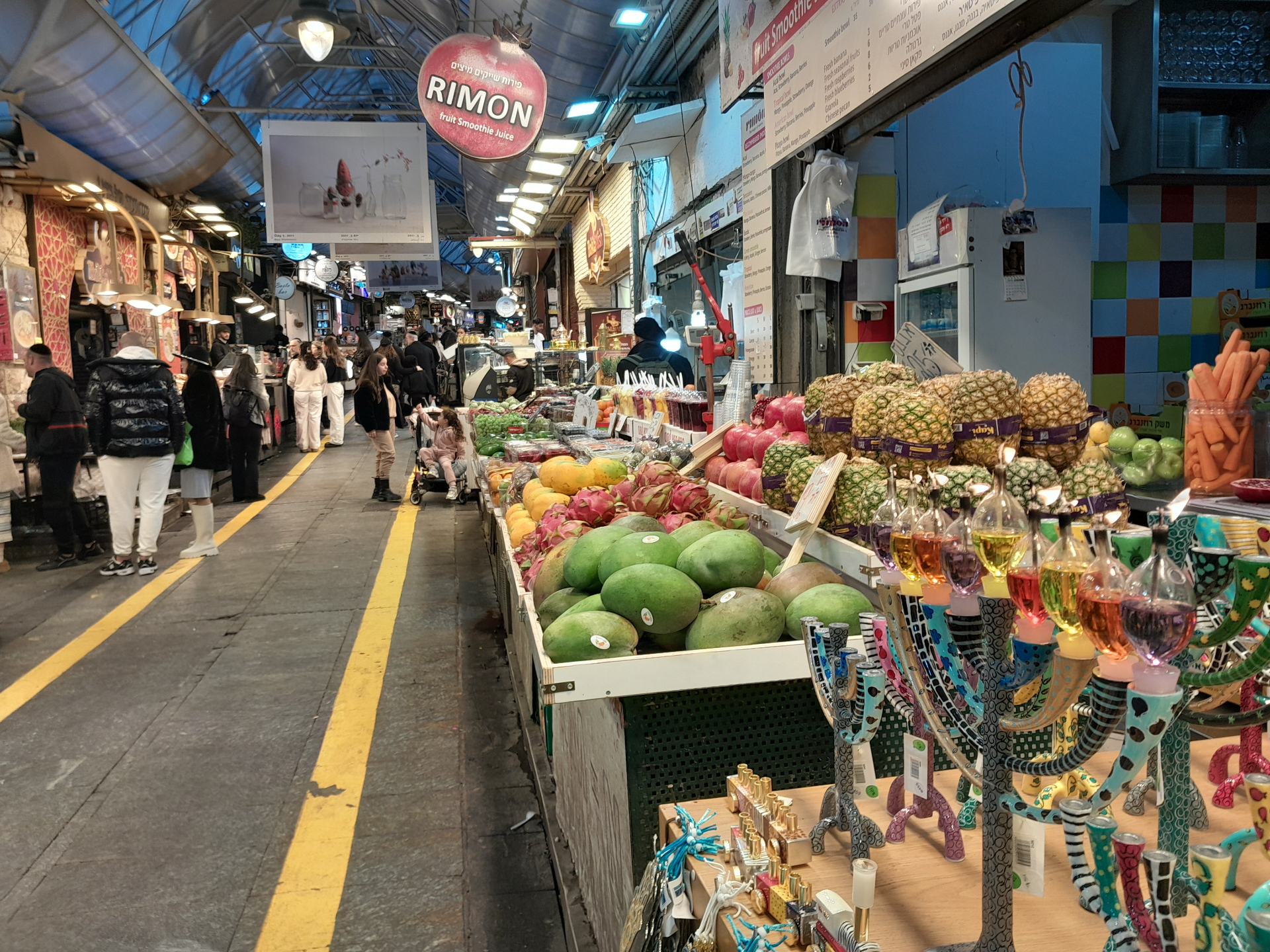
First question: why are you going?
The difference between Machane Yehuda on a Sunday morning and a Friday afternoon is night-and-day. Locals shopping for the week, tourists soaking up the chaos, foodies chasing rugelach, nightlife hunters looking for a DJ — each version of the shuk lives at a different hour. Match your visit to your mood.
The Crowds
Friday 10 AM–2 PM. Elbows, shouting, sensory overload.
The Deals
Friday 1–2:30 PM. Vendors slash prices before Shabbat.
The Food
Any weekday lunch. Sit-down spots at their best.
The Party
Thursday & Saturday night. Bars, DJs, painted shutters.
Best days & times to visit
| Day | Morning | Afternoon | Night |
|---|---|---|---|
| Sun | Quiet. Fresh delivery. Best for photos. | Picks up. Locals stocking up. | Bars open, mellow crowd. |
| Mon | Calm. Easy shopping. | Steady, not crowded. | Quiet night. |
| Tue | Fresh produce delivery. Peak selection. | Manageable. | Building energy. |
| Wed | Calm morning. | Locals prepping midweek. | Some bars busy. |
| Thu | Fresh delivery. Getting busier. | Loud, festive pre-weekend. | Nightlife peak. DJs & live music. |
| Fri | Full chaos. Locals + tourists. | 1–2:30 PM: fire-sale prices before Shabbat. | Closed for Shabbat. |
| Sat | Closed (Shabbat). | Closed. | Reopens ~9 PM. Biggest party of the week. |
Rule of thumb: early morning is calm, afternoons pick up, evenings the produce stalls shut and the nightlife takes over.
Fresh delivery vs. clearance
🌱 Freshest produce
Deliveries from farms and kibbutzim arrive early Sunday, Tuesday and Thursday. Come 8–10 AM those days for the best mangoes, dates, herbs, dragonfruit and stone fruit — before anyone else picks through.
💰 Deepest discounts
Friday 1:00–2:30 PM. Vendors must clear stock before Shabbat and prices collapse — sometimes 50–70% off. Great for a Shabbat-dinner haul; bad for peaceful browsing.
What people actually buy here
🥭 Produce & juices
- Farm-fresh fruit and veg
- Fresh pomegranate, orange, carrot juice
- Uzi Eli's Yemenite health drinks
- Herbs, sabra (cactus fruit), fresh dates
🥯 Bakeries galore
- Marzipan Bakery — chocolate rugelach hot from the oven
- Fresh pita, laffa, challah, jachnun
- Duvdevan (cherry) & halva pastries
- Sufganiyot around Chanuka
🍽️ Prepared & hard-to-find
- Kubbeh, shakshuka, hummus, sabich
- Boutique olive oil, tahini, spices, wine
- Judaica, kitchen goods, everyday items
- Halva Kingdom — 40+ flavors, free samples
The night shuk
The shuk used to shut down completely at sundown. Then artists started painting the metal shutters of the closed stalls — turning the alleys into a nighttime open-air gallery — and a bar scene grew up around it. Now it's one of the loudest party districts in Jerusalem: DJs at Casino de Paris, live jazz at Beer Bazaar, cocktails at Gatsby, and dozens of tavernas spilling into the alleys. Peak nights: Thursday and Saturday after 10 PM.
A quick history
Machane Yehuda began in the late 1880s as an informal outdoor market where Arab farmers from surrounding villages sold produce to residents of the new Jewish neighborhoods outside the Old City walls. The British Mandate government formalized it in the 1920s and 1930s, adding the covered "Iraqi Market" (HaShuk HaIraqi) section. For decades it stayed a scrappy working market for Kurdish, Iraqi and Yemenite immigrant families — that's why Jerusalem-style kubbeh and hamin took root here. A major renovation in the 2000s brought lighting, wine bars and gastro restaurants; the nightlife scene followed. Today the shuk is both a working market and a cultural landmark.
Food tours, scavenger hunts & games
Multiple companies run guided food tours (typically 2–3 hours, 6–10 tastings) departing from the Jaffa Road entrance most mornings. There are also team scavenger hunts and taste-and-guess games — great for families, groups and corporate outings. Book a Sunday–Thursday morning tour to keep the experience calm and the guide's voice audible.
Buyer beware
Machane Yehuda is mostly honest — but a handful of stalls target tourists. Protect yourself:
- ⚠Ask the price before anything is weighed or bagged. A "small scoop" of specialty tea, saffron or candied fruit can be ₪150–₪400. Once it's in the bag, it's yours.
- ⚠Never let a vendor run your credit card before quoting a total. A common trick: they scoop, weigh, tap the card, then tell you the price. Stop them.
- ⚠Watch the "special tea" pitch. Health-tea, "aphrodisiac" mixes and rare saffron are the classic overprice items. Buy tea at supermarkets or vetted spice shops instead.
- ⚠Confirm currency. Prices are in shekels (₪ / ILS). Check the current USD/EUR/GBP rate before you go — see our Israel currency guide.
- ⚠Produce is usually honest. Prices are marked per kilo on cards. Prepared foods, spices, teas and candies are where you need to be sharp.
- ⚠Say "no" and walk. If you don't want it, don't take it — even if it's already in a bag. You are not obligated to pay for something you didn't agree to buy.
Getting there
Take the Jerusalem Light Rail (Red Line) to the "Mahane Yehuda" stop directly at the main entrance on Jaffa Road. From the Old City it's a 15-minute walk down Jaffa via Zion Square. Parking is scarce — use the Klal Building underground lot on Jaffa Road, or come by taxi/light rail.
Gallery
Tap any image to enlarge.